
At a glance
What international buyers should know
- There is no single best neighborhood in Nice; the useful choice begins with the owner's daily routine, travel pattern and tolerance for density, hills and property management.
- The center, Old Nice and the Port support a more walkable second-home model, while Cimiez, Mont Boron and parts of western Nice can offer more residential space with greater dependence on slope, parking or local transport.
- Neighborhood names are only a first filter. Sun, noise, access, building condition and the final few hundred meters can change materially from one street to the next.
- Test the exact address at the hours and in the seasons that will matter, then verify planning, risk, co-ownership and access records property by property.
The direct answer: choose the routine before the neighborhood
The best place to buy in Nice is the area that makes the intended life easy. An international owner who wants to arrive from the airport, walk to dinner and close the apartment without arranging a car needs a different address from a household seeking terraces, privacy, guest space and a hillside view. The neighborhood should be selected around use, not reputation alone.
A practical Nice search can begin with six working zones: the central districts around Carré d’Or and the Musiciens; Vieux Nice; the Port and Garibaldi area; Cimiez; Mont Boron and Mont Alban; and the western residential belt around the Baumettes, Fabron and Californie. These are search areas rather than legal boundaries, and each contains very different streets and buildings.
Nice’s shape matters. The sea, central plain and surrounding hills create short map distances that do not always translate into equivalent daily access. Before comparing finishes or views, decide how often the household will walk, drive, use the tram, host guests, visit outside summer and leave the property empty. That operating brief will usually eliminate more unsuitable homes than a broad neighborhood ranking.
Carré d’Or, Musiciens and the center: a city base without ceremony
The central districts suit a buyer who wants ordinary life within walking distance: the seafront, shops, restaurants, rail connections and the urban services around Jean Médecin. The property choice is often an apartment in an established building, with the quality of the entrance, lift, façade, roof, common systems and co-ownership management carrying as much weight as the private interior.
This is the most credible starting point for a low-friction, car-light second home, but the address must be tested carefully. A quiet upper-floor apartment can sit close to a busy commercial street; a beautiful boulevard can bring traffic, deliveries or late activity. Confirm the route from the tram or station with luggage, the location of paid and resident parking zones, and whether a garage being marketed with the apartment can comfortably accommodate the vehicle that will actually be used.
Central Nice also contains much of the architecture associated with the city’s historic development as an international winter resort. UNESCO identifies neoclassical, eclectic, Belle Époque and Art Deco building types as part of that legacy. Architectural character can be a central reason to buy, but it should prompt closer review of windows, cooling, shutters, insulation, common works and any restrictions affecting alterations.
Vieux Nice: buy the experience only after testing the logistics
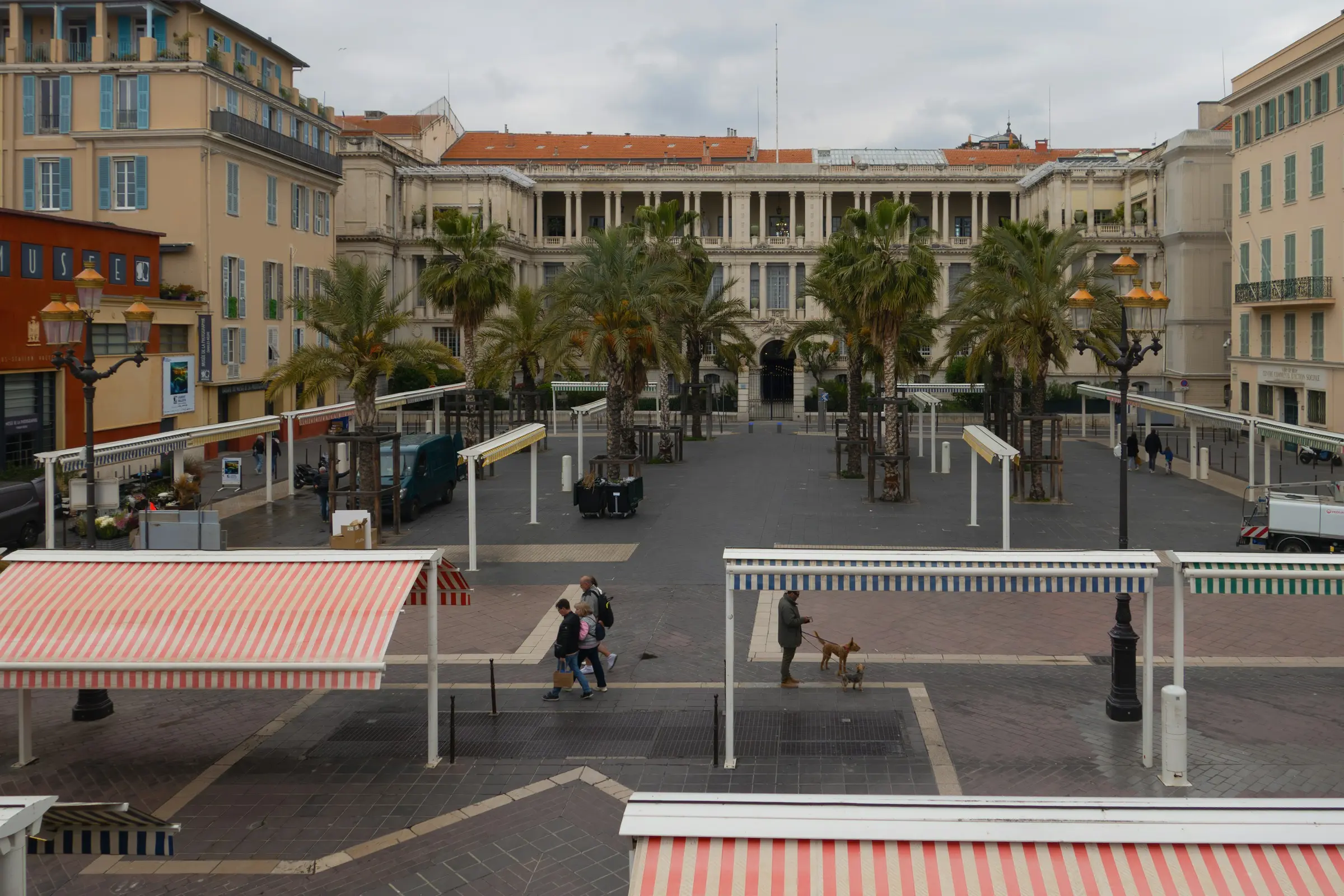
Vieux Nice offers the most concentrated version of the historic city: narrow streets, markets, food, public squares and immediate access to the seafront and Castle Hill. For an owner who wants atmosphere and accepts urban intensity, the area can provide a distinctive compact base that is difficult to reproduce elsewhere.
The same urban form requires disciplined due diligence. Buildings can involve stairs, limited lifts, compact floor plans, internal rooms, complex access and exposure to activity below. Visit early in the morning and late in the evening. Test deliveries, refuse collection, taxi drop-off, luggage movement and the route from any parking. The City’s current moving guidance confirms that access to pedestrian areas and temporary street occupation can require advance authorization, an operational detail worth understanding before purchase rather than during the first renovation or move.
Vieux Nice also has a specific planning context. The City states that its Plan de sauvegarde et de mise en valeur is independent from the metropolitan PLU and sets architectural conditions intended to conserve and enhance buildings and the urban setting; building authorizations can be subject to review by the Architecte des Bâtiments de France. A buyer planning new windows, external equipment or material changes should obtain property-specific advice before treating the design as feasible.
The Port, Garibaldi and Lympia: connected city life with a maritime edge
The Port and the streets around Garibaldi can suit buyers who want restaurants, neighborhood life and maritime character without living inside the densest part of the old town. The housing stock includes traditional apartments, more formal façades and buildings whose relationship to the harbor, tram and surrounding streets changes block by block.
Transport is a material advantage. As reviewed on 30 August 2026, Lignes d’Azur states that tram line 2 serves both terminals of Nice Côte d’Azur Airport, the central Jean Médecin stop and Port Lympia. That connection can make the Port practical for owners arriving frequently from abroad and reduces the need to maintain a car for every stay.
Do not let the port view settle the decision. Test morning servicing, evening activity, traffic routes, construction exposure and the walking gradient toward the exact building. Determine whether the principal rooms face the harbor, a side street or an internal courtyard, and examine how that orientation affects light, privacy and noise when windows are open.
Cimiez: residential character above the center
Cimiez can appeal to buyers seeking a more residential rhythm, established gardens and architecture associated with Nice’s period as a winter destination. UNESCO’s description of the city specifically notes the hills of Cimiez and Mont Boron, where later development increased density while substantial architectural quality and green space remained.
The trade-off is practical rather than symbolic. A home may feel close to the center on a map while the slope, bus route, parking or final walk determines daily convenience. Compare the route to food, medical services, the station and the seafront, and test the return journey rather than only the descent. For longer stays, the ordinary weekday pattern matters more than the distance measured in a listing.
Property type also varies. A residence with grounds and professional management can support remote ownership differently from a private villa or a small building with fewer shared services. Review sun, outlook, accessibility, garage dimensions, common charges and the building’s capital-work history together. A quieter address is valuable only when the ownership system remains workable from abroad.
Mont Boron and Mont Alban: privacy and views with a steeper operating brief
Mont Boron and Mont Alban attract buyers looking for elevation, lower-density residential settings and a closer relationship with the landscape east of the center. The search can include apartments in hillside residences, villas and homes whose outlook reaches toward Nice, the Port or the Villefranche side.
Here, access is part of the asset. Inspect road width, turning space, gate position, delivery access, pedestrian safety, garage approach and the route during poor weather or after dark. A dramatic terrace does not compensate for a final approach that the household will avoid. If staff, guests or tradespeople will visit, test their access as well as the owner’s.
The hillside also makes property-level technical review essential. Drainage, retaining structures, vegetation, slope and mapped natural risks should be examined through the official Géorisques record and independent expertise appropriate to the property. View orientation at different times of day and distinguish an open view from a legally protected one; future development and vegetation are separate questions that require planning and title review.
Baumettes, Fabron and the west: test access and exposure address by address
Western Nice can offer sea-facing residences, terraces, gardens and more modern building formats while retaining access to the Promenade and airport corridor. The area can work well for buyers who value a larger residential setting, proximity to the airport or an easier departure west along the coast.
The search should not treat the west as one uniform district. The relationship to the tram, the Promenade, the hills and the airport changes quickly. Test the walking route rather than relying on a straight-line distance, and confirm whether the household will use a car, public transport or both. In a residence, identify which shared services justify the charges and how the property is monitored during absence.
Aircraft and transport noise must be assessed at the exact address and during the times the home will be occupied. The Alpes-Maritimes prefecture publishes the airport’s Plan d’Exposition au Bruit and strategic noise maps; the current official record notes approval of the strategic maps by prefectural order on 18 December 2023. Those maps provide a formal starting point, but they do not replace listening from the terrace and principal rooms with windows open.
Use a two-stage viewing test
The first visit should test the neighborhood without the property presentation. Begin at the airport, station or parking location the household will actually use. Walk the last kilometer, buy ordinary groceries, return after dinner and observe the building entrance, street lighting, noise and gradient. Repeat the route with the assumptions of luggage, children, older guests or a late arrival where relevant.
The second visit should test the building and the home. Record sun at the intended hours, airflow, window exposure, lift and stair access, mobile reception, deliveries, waste arrangements, cooling, storage and the route between indoor and outdoor spaces. For an apartment, read the co-ownership documents and planned works. For a villa or hillside property, expand the technical review to structure, drainage, boundaries, access and landscape management.
- Define the expected number and length of annual stays before selecting the search area.
- Compare airport, station, beach and daily-service access using the actual door-to-door route.
- Visit the exact street at contrasting times, including an evening and an ordinary weekday morning.
- Check the current metropolitan planning map, official risk record and any heritage controls for the specific parcel.
- Separate neighborhood preference from building quality and property condition; all three must work.
How SDM Luxury structures a Nice search
SDM Luxury Real Estate helps international buyers translate intended use, travel habits, privacy, maintenance tolerance and architectural preferences into a focused Nice property brief. The team can compare suitable streets and building types, organize viewings around the real ownership questions and gather property records for review with the buyer’s independent notaire, technical advisers and other specialists.
The purpose is not to declare one district superior. It is to find the part of Nice where the household’s preferred daily life and the property’s operating demands align. Once that is clear, the search becomes smaller, more precise and more useful.
General property and location information only. Neighborhood conditions, access, planning rules, noise, risks, co-ownership obligations and property condition vary by address and can change. Verify the specific property with appropriately qualified French legal, notarial, planning, technical, insurance and tax professionals before acting.
Primary sources
Official information and further reading
Facts and links reviewed August 30, 2026.
- UNESCO World Heritage Centre: Nice, Winter Resort Town of the Riviera (opens in a new tab)
- Nice Côte d’Azur Tourist Office: the city’s UNESCO-listed area (opens in a new tab)
- Lignes d’Azur: airport access by tram (opens in a new tab)
- Lignes d’Azur: current network maps (opens in a new tab)
- City of Nice: current paid-parking perimeter (opens in a new tab)
- City of Nice: current metropolitan planning documents and Vieux Nice protections (opens in a new tab)
- Métropole Nice Côte d’Azur: PLUm and interactive planning map (opens in a new tab)
- Alpes-Maritimes prefecture: Nice airport noise maps and plans (opens in a new tab)
- Géorisques: official property-risk information (opens in a new tab)
Published by SDM Luxury Real Estate (opens in a new tab) / Nice, France
Last reviewed .