
At a glance
What international buyers should know
- In Antibes, Picasso worked at the Château Grimaldi in 1946 and left a group of paintings and drawings that became the foundation of the city’s Picasso museum.
- In Vallauris, where he lived from 1948 to 1955, ceramics became a sustained practice alongside sculpture, linocut and the monumental War and Peace cycle.
- The two places tell different parts of the story: Antibes preserves a concentrated postwar studio season; Vallauris reveals a longer relationship with materials, workshops and public art.
Where did Picasso work on the French Riviera?
The clearest Picasso trail on the French Riviera runs through Antibes and Vallauris. At Antibes, the artist worked in the Château Grimaldi for part of 1946, using rooms offered by the museum’s curator as a temporary studio. At Vallauris, he established a longer base from 1948 to 1955 and worked intensively with ceramics while continuing to develop sculpture, prints and painting. The two towns are close on a map but represent different chapters in his postwar work.
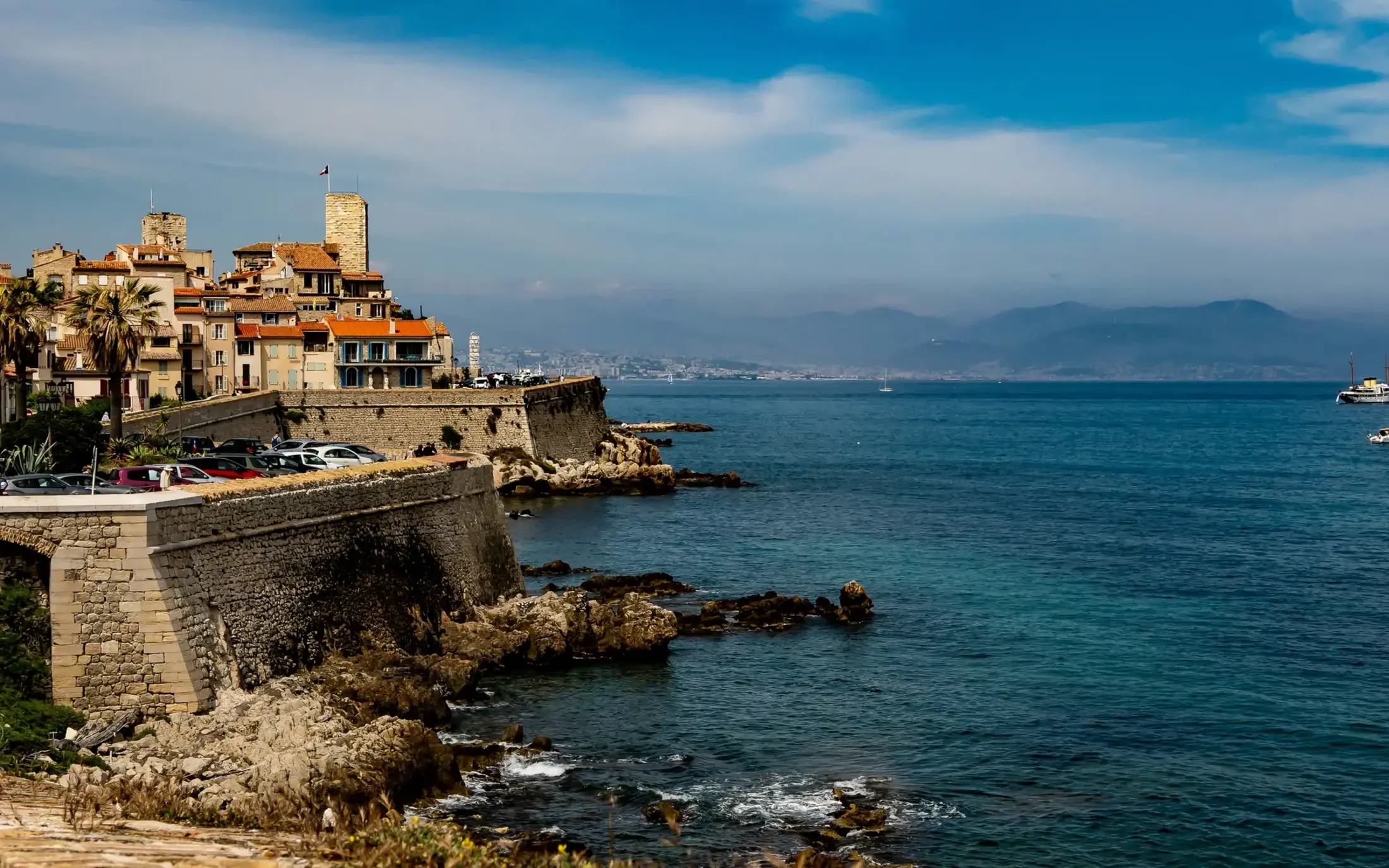
Antibes sits on the coast between Cannes and Nice; the Château Grimaldi rises above the old town and Mediterranean ramparts. Vallauris lies inland from Golfe-Juan, a short drive northwest of Antibes and northeast of Cannes. Together they form a practical cultural route for residents of the central French Riviera, or Côte d’Azur, without reducing Picasso’s years in the South of France to a single house or museum.
What happened at the Château Grimaldi in Antibes in 1946?
The City of Antibes records that Picasso visited the Musée Grimaldi in September 1945. The following year, curator Romuald Dor de la Souchère offered him part of the Château Grimaldi as a studio. Picasso worked there during the autumn of 1946, with the sea, the old town and the stone rooms becoming part of a sharply defined postwar period rather than a long residence.
When he left, Picasso placed 23 paintings and 44 drawings with the museum, according to the city’s official account. Those works gave Antibes something more substantial than a commemorative address: a collection made in the building and retained there. The château later became the Musée Picasso, making it one of the rare museums where the relationship between artist, studio and collection can be read in the same place.
For a visitor, the useful distinction is between the historic setting and the work itself. The old-town ramparts orient the museum dramatically above the water, but the importance of Antibes lies inside: a concentrated group of works created after the war, when Mediterranean subjects and mythic figures could carry both release and unease.
Why did Vallauris change Picasso’s work?
Vallauris offered a different kind of creative infrastructure. The official tourism office dates Picasso’s residence there from 1948 to 1955, when he lived with Françoise Gilot and their children Claude and Paloma. The town had a long pottery tradition, and Picasso’s continuing work with the Madoura workshop turned ceramics from an experiment into a sustained body of production.
The national Picasso museum describes the Vallauris years as especially fertile. Plates, bowls and jugs became surfaces and forms for faces, animals and mythological subjects; technical questions about clay, glaze, firing and repetition entered the work. At the same time, Picasso developed sculpture from found and everyday materials and explored linocut. Vallauris was not merely where finished ideas were decorated. The workshops and materials affected what could be imagined and made.
That relationship explains why the town still feels different from Antibes. Antibes preserves a specific studio season in a historic building. Vallauris represents repeated contact with makers, kilns and processes over several years. One is concentrated and museum-like; the other is inseparable from a working ceramic town.
What is Picasso’s War and Peace chapel in Vallauris?
In 1952, Picasso worked on the monumental War and Peace composition in his Fournas studio. The work was conceived for a former chapel at Vallauris and is now presented by the Musée national Picasso, La Guerre et la Paix. The national museum describes the project as a secular temple for peace and places it within Picasso’s broader engagement with war, violence and public responsibility.
The chapel changes the scale of the Vallauris experience. Ceramics show the artist thinking through objects that can be handled, repeated or arranged; War and Peace surrounds the viewer. The curved surfaces and opposing themes create an environment rather than a conventional framed painting. It is the strongest reason not to treat Vallauris as an optional extension of an Antibes visit.
Current access, opening days and exhibition arrangements should be checked directly with the national museum before traveling. The building and collection have their own operating schedule, and a cultural itinerary is more satisfying when it allows time for both the chapel and the town’s ceramic history rather than using Vallauris as a brief stop between coastal appointments.
How should you plan a Picasso day between Antibes and Vallauris?
Begin in old Antibes, where the relationship among the ramparts, Château Grimaldi and sea is easiest to understand before entering the museum. Allow enough time to see the permanent collection rather than simply identifying the building. Then continue by private car to Vallauris, orienting the second half of the day around the national museum and the former chapel of War and Peace.
The route is compact, but the institutions should set the timetable. Check official opening information, temporary closures and ticket arrangements on the day you plan to go; do not rely on a generic tourism itinerary. If ceramics are the central interest, leave room for the town beyond the chapel and distinguish museum collections from commercial workshops and galleries. This is a working tradition as well as an art-historical one.
For residents, the trail is especially well suited to repeated visits. Antibes can be revisited for the 1946 works and the château setting; Vallauris can be approached through ceramics, sculpture or the chapel on separate days. The value is not in completing a checklist but in seeing how place, material and scale changed from one chapter to the next.
What does Picasso’s Riviera add to life here today?
Picasso’s Antibes and Vallauris belong to a wider Riviera geography in which museums, workshops and historic towns remain part of ordinary year-round life. The cultural map is not confined to a festival calendar or summer exhibition. From a home near Cannes, Antibes or Nice, these institutions can become familiar places—visited with guests, returned to in quieter months and connected with the architecture and landscape around them.
A property search shaped by that life may favor an Antibes old-town apartment, a villa on the surrounding hills, or a home with straightforward access between Cannes, Vallauris and Nice. If regular museum visits, hosting and the cultural rhythm of the central Riviera belong in your plans, SDM Luxury Real Estate can help translate those preferences into a focused location and property search, beginning with how you want to spend your time here.
General cultural information only, reviewed October 7, 2026. Museum access, opening arrangements, exhibitions and the condition or use of historic sites can change; confirm current details with the relevant institution before visiting. The contemporary photograph shows old Antibes, the Château Grimaldi and its ramparts as location context; it does not depict Picasso, an archival scene, an SDM listing or any property discussed.
Primary sources
Official information and further reading
Facts and links reviewed October 7, 2026.
- City of Antibes — discover the Musée Picasso (opens in a new tab)
- Vallauris Golfe-Juan Tourism — the Vallauris years (opens in a new tab)
- Musées nationaux des Alpes-Maritimes — Picasso: the Vallauris years (opens in a new tab)
- Musée national Picasso — War and Peace (opens in a new tab)
- Musées nationaux des Alpes-Maritimes — current visitor information (opens in a new tab)
Published by SDM Luxury Real Estate (opens in a new tab) / Nice, France
Last reviewed .